

NYC Air Rights Explained: What Property Owners Need to Know
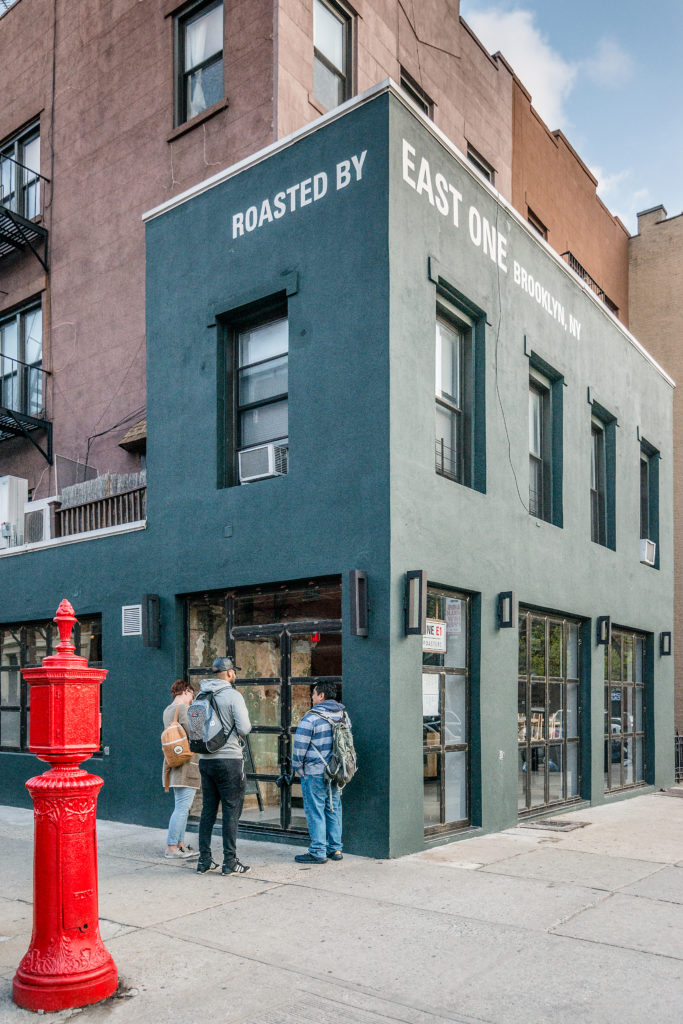
In New York City, the space above a building can sometimes be nearly as valuable as the building itself.
This development potential is commonly referred to as air rights. For property owners, developers, and real estate investors, understanding air rights can reveal opportunities to expand a building, redevelop a site, or transfer unused development potential to another property.
However, owning a building does not mean you automatically own the unrestricted right to build into the sky. Air rights are governed by New York City zoning regulations, Floor Area Ratio calculations, zoning lot boundaries, landmark rules, special district requirements, and the physical limitations of the property.
Before relying on air rights as part of a sale, expansion, or development plan, it is important to understand how they work and whether they can realistically be used.
What Are Air Rights in NYC?
In New York City real estate, the term air rights generally refers to unused development rights.
Every zoning lot is allowed a certain amount of floor area based on the zoning district in which it is located. When an existing building uses less floor area than zoning permits, the difference may represent unused development rights.
For example, a low-rise building located in a zoning district that permits substantially more floor area may be considered underbuilt. That unused development potential could potentially be used to expand the existing building or, in certain situations, transferred to another qualifying property.
Air rights are therefore not simply the empty space above a roof. They represent the portion of a property’s legally permitted development potential that has not yet been used.
How Floor Area Ratio Determines Development Potential
New York City uses Floor Area Ratio, commonly called FAR, to determine how much zoning floor area may be built on a zoning lot.
The basic formula is:
Permitted FAR × Zoning lot area = Maximum permitted zoning floor area
Consider a zoning lot containing 10,000 square feet of land with a permitted FAR of 5.0.
The calculation would be:
5.0 × 10,000 square feet = 50,000 square feet
The property could therefore contain up to 50,000 square feet of zoning floor area, subject to other applicable regulations.
If the existing building contains only 30,000 square feet of zoning floor area, the property may have approximately 20,000 square feet of unused development rights.
Those 20,000 square feet are what many owners and developers commonly call air rights.
Air Rights vs. Development Rights
The terms air rights and development rights are often used interchangeably, but development rights is the more precise zoning term.
This distinction is important because visible space above a building does not necessarily mean the property has available development rights.
A building may have a large amount of open space above its roof but already use all the floor area permitted under zoning. In that situation, the owner may not have any additional development rights available.
Likewise, a property may have unused FAR but still be unable to support a vertical addition because of:
- Maximum building height
- Setback requirements
- Structural limitations
- Lot coverage restrictions
- Fire and life-safety requirements
- Egress requirements
- Accessibility standards
- Landmark restrictions
- Building envelope controls
- NYC Construction Code requirements
FAR helps establish the maximum amount of floor area, but it does not determine the exact shape, height, or feasibility of a building.
How NYC Air Rights Are Calculated
The initial calculation is relatively straightforward.
First, calculate the maximum permitted floor area:
Permitted FAR × Zoning lot area = Maximum buildable zoning floor area
Then subtract the existing zoning floor area:
Maximum zoning floor area − Existing zoning floor area = Unused development rights
A Simple Air Rights Example
Suppose a zoning lot contains 5,000 square feet of land and is located in a district with a permitted FAR of 4.0.
The maximum permitted zoning floor area would be:
5,000 × 4.0 = 20,000 square feet
If the existing building contains 12,000 square feet of zoning floor area, the property may have:
20,000 − 12,000 = 8,000 square feet of unused development rights
While this calculation provides a useful starting point, it does not confirm that all 8,000 square feet can be built or transferred.
The property must still be evaluated for height limits, yards, setbacks, lot configuration, permitted uses, contextual zoning requirements, open-space rules, landmark restrictions, and any applicable special district regulations.
Why FAR Is Only the Beginning
One of the most common mistakes property owners make is assuming that unused FAR automatically equals usable or sellable air rights.
A property may appear to have significant unused development potential on paper, but the building envelope may not accommodate the additional floor area. Height limits, setbacks, rear-yard requirements, lot coverage, tower rules, and structural limitations can all affect what is realistically possible.
The value of air rights also depends heavily on whether there is a receiving property that can legally and economically use them.
This is why an air rights analysis should include both zoning calculations and an architectural feasibility review. The real question is not only how much floor area may be available, but how much can be incorporated into a compliant and practical design.
What Is a Zoning Lot?
To understand air rights, property owners must also understand the difference between a tax lot and a zoning lot.
Tax Lots
A tax lot is used by the New York City Department of Finance to identify a property for tax and assessment purposes.
Zoning Lots
A zoning lot is the unit of land used to apply zoning regulations.
A zoning lot may consist of one tax lot, part of a tax lot, or multiple tax lots that have been legally combined for zoning purposes.
This distinction matters because air rights are calculated based on the zoning lot, not simply the tax lot or the property’s borough-block-lot number.
A property owner reviewing only a tax map may therefore overlook agreements, lot mergers, or development rights that affect the site’s actual zoning potential.
How Can Air Rights Be Used?
Property owners generally use air rights in one of two ways.
1. Using Air Rights on the Existing Property
When a property has unused development rights, the owner may be able to use them for:
- A vertical addition
- A rear or side enlargement
- Additional residential or commercial floor area
- A major renovation
- A partial redevelopment
- A complete redevelopment of the site
However, unused FAR does not guarantee approval for an addition.
The project must also comply with building height, setbacks, yards, egress, fire safety, accessibility, structural requirements, and the NYC Construction Codes. Landmarked properties and properties within special zoning districts may face additional restrictions.
An architectural massing or feasibility study can help determine whether the unused floor area can be incorporated into a workable design.
2. Transferring Air Rights to Another Property
In certain situations, unused development rights can be transferred to another property.
This commonly occurs when one property is underbuilt and a nearby development site can use additional floor area.
The most common mechanism is a zoning lot merger, although separate transfer rules may apply to:
- Individual landmarks
- East Midtown properties
- Listed theaters
- South Street Seaport properties
- West Chelsea properties
- Properties within the Special Hudson River Park District
Each transfer mechanism has its own geographic, procedural, and documentation requirements.
What Is a Zoning Lot Merger?
A zoning lot merger combines two or more qualifying parcels into a single zoning lot.
Once the properties are treated as one zoning lot, unused development rights from one portion of the lot may be used on another portion.
For example, an underbuilt property may be combined with an adjoining development site. The combined zoning lot is then evaluated as a whole, allowing available floor area to be shifted to the portion being developed.
In many cases, zoning lot mergers can be completed as-of-right, meaning they may not require a discretionary land-use approval when the properties qualify and all legal requirements are satisfied.
That does not mean the process is simple.
A zoning lot merger may require:
- A title review
- A zoning analysis
- Updated surveys
- Party-in-interest waivers
- Lender consent
- Recorded declarations
- Development rights agreements
- Allocation of future development rights
- Maintenance and enforcement provisions
Because a merger can affect several properties and parties, zoning, architectural, legal, title, and financial professionals are often involved.
Can Air Rights Be Sold Anywhere in NYC?
No. Air rights cannot generally be separated from a property and sold to an unrelated development site anywhere in New York City.
Most transfers are geographically restricted.
A standard zoning lot merger generally requires the properties to be adjoining or otherwise satisfy specific contiguity requirements. Other programs, such as landmark or special district transfers, may allow rights to move across a street, intersection, or designated transfer area.
However, those broader transfers are only permitted when the properties meet the requirements of the applicable zoning provision.
An owner with unused development rights in one neighborhood cannot ordinarily sell them to a developer across the city. There must be a legally permitted connection between the granting site and the receiving site.
How Landmark Air Rights Work
Landmarked buildings often have unused development rights because historic preservation restrictions may limit demolition, major alteration, or vertical expansion.
In certain circumstances, those unused rights may be transferred to nearby development sites.
Changes Under City of Yes
New York City updated portions of its landmark development rights framework through the City of Yes for Housing Opportunity, approved by the New York City Council on December 5, 2024.
Under the updated rules, certain landmark development rights transfers may proceed through a City Planning Commission Chair certification under Zoning Resolution Section 75-422.
This provides an alternative to relying entirely on the older special permit process.
Eligible landmark rights may generally be transferred to receiving sites:
- On the same block
- Across the street from the landmark’s block
- Across an intersection from the block
- Within certain broader areas in qualifying high-density commercial districts
The receiving site’s floor area increase is generally limited to 20% above the amount that would otherwise be permitted. In certain high-FAR commercial or manufacturing districts, an increase of up to 30% may be permitted under specific conditions.
Larger transfers or projects requiring additional bulk modifications may still require a special permit under Zoning Resolution Section 74-79.
Landmark transfers may also involve a continuing maintenance program and agency review intended to support the long-term preservation of the landmarked building.
Special District Air Rights Transfers
Several areas of New York City have their own development rights transfer programs.
East Midtown
The East Midtown zoning framework allows certain development rights to be transferred from qualifying landmarks to eligible receiving sites.
Projects may also involve public realm improvements, transit improvements, or contributions required by the applicable zoning provisions.
Theater Subdistrict
The Theater Subdistrict includes rules allowing development rights to be transferred from qualifying listed theaters.
These transfers are governed by the requirements of Zoning Resolution Section 81-741 and related provisions.
South Street Seaport, West Chelsea, and Hudson River Park
The South Street Seaport Subdistrict, West Chelsea, and the Special Hudson River Park District also contain specialized transfer mechanisms.
For example, the Special Hudson River Park District permits certain development rights to move from designated granting sites to designated receiving sites.
These programs are highly location-specific. A transfer method available in one special district should not be assumed to apply elsewhere.
Why Air Rights Matter for Property Owners
Air rights can significantly affect a property’s value and future potential.
An underbuilt property may offer opportunities that are not immediately visible from its current condition. The unused development rights could support an expansion, full redevelopment, or transaction with a neighboring developer.
An air rights analysis can help an owner answer questions such as:
- Is my property underbuilt?
- Can I add another floor?
- How much unused development potential exists?
- Can the unused rights be transferred?
- Is there a qualifying receiving site nearby?
- Could the rights increase the property’s sale value?
- Should the rights be evaluated before refinancing?
- Would redevelopment produce a higher-value use?
- Has the zoning lot already transferred or allocated development rights?
A property with unused rights may be more valuable than a similar building that is already fully built out.
However, apparent physical space above a building does not automatically create value. The rights must be legally available, transferable when applicable, and usable in a realistic development project.
Why Air Rights Matter for Developers
For developers, additional development rights can make the difference between a limited project and a financially viable one.
Acquiring air rights may allow a development to include:
- More residential units
- Larger floor plates
- Additional commercial space
- More community facility space
- A more efficient building layout
- Greater flexibility in the building design
Still, acquiring more FAR does not eliminate other zoning restrictions.
A receiving site may remain limited by maximum height, setbacks, lot coverage, rear-yard requirements, tower regulations, contextual zoning controls, or public realm obligations.
Developers should therefore evaluate air rights as part of the full zoning and design strategy rather than treating them as independent square footage that can automatically be added to a project.
Common Air Rights Mistakes
Air rights can be valuable, but they are also easy to misunderstand.
Assuming Rights Can Be Sold Anywhere
Most air rights transfers are geographically restricted. A transfer must qualify under a specific zoning mechanism.
Confusing Tax Lots With Zoning Lots
Air rights are regulated at the zoning lot level. A tax lot alone may not show the full development rights picture.
Focusing Only on FAR
FAR is essential, but it is only one part of the analysis. Height, setbacks, lot coverage, use regulations, landmarks, special districts, and building code requirements may reduce what can actually be built.
Ignoring Prior Zoning Agreements
Previous zoning lot mergers, declarations, easements, or development agreements may have already allocated or restricted the property’s rights.
Overlooking Title and Lender Requirements
Transfers and zoning lot mergers often require title documents, waivers, lender approvals, and recorded agreements.
Overestimating the Value of Air Rights
Air rights have value only when a receiving site can legally and economically use them. A large amount of unused FAR may have limited market value when no practical receiving site exists.
Waiting Too Long to Review Them
Air rights should be investigated before a property is purchased, sold, refinanced, expanded, or offered to a neighboring developer.
Discovering restrictions late in the process can weaken negotiations or require an expensive redesign.
When Should Property Owners Request an Air Rights Analysis?
Property owners should consider an air rights or zoning analysis when:
- Planning an addition or vertical expansion
- Considering a property sale
- Refinancing a property
- Receiving interest from a neighboring developer
- Purchasing a low-rise building in a higher-density district
- Evaluating a landmarked property
- Considering full or partial redevelopment
- Exploring the property’s highest and best use
- Negotiating a zoning lot merger
- Reviewing a potential development rights purchase
A complete analysis may evaluate:
- The property’s zoning district
- Zoning lot boundaries
- Lot area
- Permitted FAR
- Existing zoning floor area
- Unused development rights
- Prior zoning lot agreements
- Available transfer mechanisms
- Receiving site limitations
- Height and setback controls
- Landmark or special district restrictions
- Architectural and structural feasibility
How Parkbench Architects Can Help
Air rights can unlock meaningful property value, but their potential cannot be determined through a simple FAR calculation alone.
A complete review must consider zoning, building envelope controls, structural conditions, landmark requirements, agency procedures, title documents, and the practical ability to use the additional floor area.
At Parkbench Architects, we help property owners, developers, and real estate professionals understand what may be possible before major decisions are made.
Our team can assist with:
- Zoning and FAR analysis
- Air rights evaluations
- Architectural feasibility studies
- Building massing studies
- Vertical and horizontal expansion concepts
- Redevelopment planning
- Preliminary building layouts
- Early-stage development strategy
Whether you are evaluating an existing property, planning an addition, exploring redevelopment, or considering an air rights transaction, an architectural and zoning review can provide the clarity needed to move forward.
Final Thoughts
NYC air rights are among the most valuable and misunderstood elements of New York City real estate. They can support building expansions, unlock redevelopment opportunities, increase property value, and improve the feasibility of a nearby development. However, they are not automatic, unlimited, or freely transferable.
The amount of unused FAR shown in an initial calculation is only the beginning.
Property owners and developers must also consider zoning lot boundaries, building height, setbacks, landmarks, special districts, structural limitations, transfer rules, and recorded property agreements.
Before buying, selling, transferring, or relying on air rights, work with professionals who can translate New York City’s complex zoning regulations into a practical development strategy.
Helpful NYC Air Rights Resources
- NYC Zoning Resolution Section 12-10: Definitions, including FAR and zoning lot
- NYC Department of City Planning Zoning Glossary
- NYC Department of Buildings Key Project Terms
- NYC City of Yes for Housing Opportunity
- ZR Section 75-422: Transfer of Development Rights From Landmark Sites by Certification
- ZR Section 74-79: Transfer of Development Rights From Landmark Sites by Special Permit
- Special Midtown District Zoning Rules
- Special Hudson River Park District Transfer Rules