Durable Finishes for Hospitality Spaces
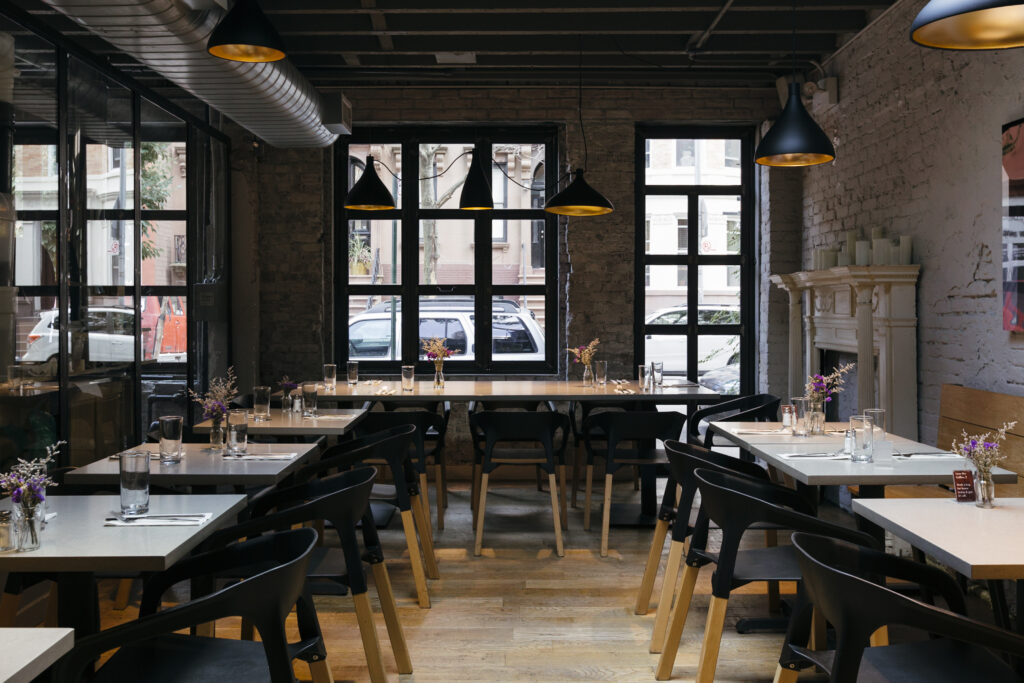
A restaurant, bar, cafe, or hotel lounge puts its surfaces through more in a week than most homes see in a year. Chairs scrape floors, glasses sweat on bar tops, cleaning chemicals soak into grout, sun fades fabric by the window, and thousands of shoes carry grit across the entry. Finishes that look right on opening day but fail within a year cost money twice: once to replace and again in lost service days. Parkbench Architects builds its work on a simple belief stated on its About page: materials should last.
This guide explains how to choose finishes for high-traffic hospitality spaces. It covers the questions to ask about every surface, the performance standards that turn marketing claims into numbers, the strengths and weaknesses of common flooring, bar top, wall, ceiling, and seating options, the fire and health rules that affect selection, how to handle sound, how to compare life-cycle costs, and how to specify, sample, install, and maintain what you choose. It is written for owners, operators, and designers of restaurants, bars, cafes, and similar spaces in New York City. It is educational, and a specific specification should be confirmed with your architect and the product manufacturer.
Six Questions to Ask About Every Surface
- What hits it? Feet, chairs, carts, bags, heat, sunlight, and the elbows of a full bar all wear surfaces differently.
- What gets spilled on it? Water, oil, citrus, wine, sugar, and cleaning products each attack different materials.
- How is it cleaned, and how often? A surface that needs gentle cleaning will not survive a closing crew with strong chemicals.
- What do the codes require? Slip resistance, flame spread, accessibility, and health rules limit your choices in specific places.
- How does it age? Some materials show wear as patina, and others look damaged. Decide which one fits the concept.
- What does repair or replacement cost, and what does it interrupt? A floor that needs a week of closure to replace costs more than its price per square foot.
Performance Standards at a Glance
Standards turn a product description into a number you can compare. Ask suppliers for test data from an independent lab, not only a brochure statement.
Property | Standard or rating | What it tells you |
|---|---|---|
Floor slip resistance | ANSI A137.1 and A326.3, measured as wet dynamic coefficient of friction (DCOF) | Tile intended for level interior spaces that are walked on when wet should have a wet DCOF of 0.42 or greater |
Upholstery abrasion | Association for Contract Textiles (ACT) guidelines, using the Wyzenbeek and Martindale tests | 15,000 double rubs (Wyzenbeek) or 20,000 cycles (Martindale) for low-traffic use, and 30,000 double rubs or 40,000 cycles for high-traffic use |
Lightfastness | AATCC 16, as used in the ACT guidelines | A minimum grade of 4 after 40 hours of light exposure for commercial textiles |
Pilling | ASTM D3511 brush pill test | ACT recommends a minimum rating of 3 for contract textiles |
Flame spread of wall and ceiling finishes | ASTM E84 surface burning classes (A, B, C) | The class required depends on the occupancy and location in the building |
Flame resistance of decorative fabrics | NFPA 701 | The New York City Fire Code requires curtains and draperies in places of public assembly to be flame resistant under NFPA 701 |
Sound absorption | Noise Reduction Coefficient (NRC), on a scale from 0 to 1 | How much sound a surface absorbs on average, with higher numbers absorbing more |
How to Read the Slip-Resistance Numbers
ANSI A326.3 sets use categories for hard flooring. Among them are Interior Wet at 0.42 wet DCOF, Interior Wet Plus at 0.50 wet DCOF, and Oils and Greases at 0.55 wet DCOF. Manufacturers who follow the standard place restaurant back-of-house and food preparation areas in the oils and greases category and open-kitchen dining areas in the interior wet plus category. The ADA Standards require floor surfaces that are stable, firm, and slip resistant but do not set a numeric value, so the number you specify is a design decision. A 0.42 DCOF is a minimum, not a guarantee.
The standard itself notes that DCOF does not predict whether a person will slip, and wear matters: foot traffic and soil can reduce a floor’s wet slip resistance over time. Ask for test data on the exact finish you will install, and plan periodic checks in busy areas.
How to Read the Upholstery Numbers
ACT’s guidelines place dining area use among the applications where fabric rated at 30,000 double rubs should be appropriate, and they note that heavier public uses may need more. They also state that results above 100,000 double rubs have not been shown to predict longer life, and that there is no correlation between Wyzenbeek and Martindale results, so compare like with like. Abrasion is only one part of durability. Lightfastness, pilling, seam strength, and cleaning compatibility all affect how a fabric holds up.
Flooring
Material | Strengths | Watch for | Often used in |
|---|---|---|---|
Porcelain tile | Dense, durable, low porosity, available in many finishes | Polished finishes can have low wet slip resistance, and grout needs sealing and cleaning | Entries, restrooms, kitchens (textured finishes), bars |
Quarry or ceramic tile | Traditional kitchen floor, textured, easy to clean | Grout joints, and surface texture that is harder to mop | Kitchens and back-of-house |
Terrazzo | Long-lasting and seamless in appearance, with custom colors | Needs a specialist installer, and slip resistance depends on the finish | Entries, dining rooms, lobbies |
Sealed concrete | Economical, with a strong industrial look | Stains and etching if the sealer fails, and hairline cracking | Dining rooms, bars, retail |
Hardwood | Warm, can be refinished | Heels, water damage, and sun fading in wet or sunlit areas | Dining rooms and lounges |
Commercial resilient flooring (vinyl and similar) | Cost-effective, water resistant, comfortable and quiet | Dents and gouges, and wear layers vary, so choose a commercial-rated product | Retail, cafes, offices |
Rubber | Slip resistant, comfortable, quiet | Some products stain from oils, and seams need care | Behind bars, entries, wellness areas |
Carpet tile | Absorbs sound, and individual tiles can be replaced | Spills and odors in food and drink areas | Lounges, private rooms, offices |
Resinous or epoxy coatings | Seamless, chemical resistant, easy to clean | Substrate preparation determines how long it lasts | Kitchens and dish areas |
Natural stone | Distinctive appearance | Porosity, etching by acids on some stones, and sealing needs | Entries, bars, restrooms |
Transitions and Accessibility
Where one floor meets another, the edge has to work for wheelchairs and for feet. The ADA Standards allow changes in level of up to one quarter inch to be vertical, require changes between one quarter and one half inch to be beveled, and require anything greater than one half inch to be ramped. Carpet must have a pile height of one half inch or less. Check these details on the finish schedule before materials are ordered. Our guide to whether your restaurant is ADA compliant explains how accessibility applies to existing spaces, and our article on ADA ramps in NYC covers entrances.
Bar Tops and Counters
A bar top has the hardest job in the room. It takes spills, ice, citrus, scratches, heat from equipment, and constant contact with hands and elbows. Choose a material that suits the use, and plan how it will be sealed, cleaned, and refinished.
Material | Strengths | Watch for |
|---|---|---|
Engineered quartz | Non-porous and consistent in color | Resin can be damaged by hot items, and edges can chip |
Granite | Tolerant of heat and scratches | Needs sealing, and the pattern varies |
Marble | Classic look | Acids from citrus and wine etch the surface, and it stains unless it is sealed and maintained |
Solid surface | Seamless and repairable | Scratches and heat marks |
Stainless steel | Hygienic and durable | Shows scratches and fingerprints, and can be loud |
Zinc, copper, and brass | Develop a patina that many operators prize | Soft metals mark easily and react with acids |
Hardwood with a protective finish | Warm and comfortable to lean on | The finish needs periodic refinishing, and standing liquid can damage it |
Concrete | Custom shapes and a distinctive look | Sealing, staining, and cracking |
High-pressure laminate | Economical and varied | Edges and seams are vulnerable, and heat can mark it |
Whichever you choose, ask for a sample and test it with the liquids your bar will serve. A patina that suits one concept can look like damage in another, so decide on the aging you accept before you order.
Walls and Ceilings
Walls
- Paint. Choose finishes that can be scrubbed. Higher sheens clean more easily and show surface flaws more clearly, so match the sheen to the wall’s condition.
- Tile. Excellent behind bars, in restrooms, and around sinks. Use a wainscot where chairs and carts hit the wall.
- Plaster. Can be beautiful and repairable, but it needs a sealed, cleanable finish in high-touch areas.
- Wood paneling. Adds warmth, and the fire-performance requirements of the finish and any treatment must be confirmed.
- Commercial wallcoverings. Look for products rated for commercial use, with cleaning instructions you can follow.
- Acoustic panels. Absorb sound, and need fabrics and cores that meet fire and cleaning requirements.
- Corner guards and rails. Protect the corners and surfaces that carts, chairs, and luggage strike.
Ceilings
Painted drywall and plaster are simple and cleanable. Acoustic tiles and panels help with noise, and wood slats over an acoustic backing add warmth and absorb sound. Exposed structure saves finish cost, but it has to be coordinated with fireproofing, sprinkler lines, ducts, and lighting, and it collects dust and grease, so plan cleaning. Kitchen and dish area ceilings need washable, nonabsorbent finishes.
Seating and Upholstery
Seating takes constant abuse from friction, body oils, spills, and sunlight. Specify upholstery by performance, not by appearance alone:
- Abrasion. Use at least the ACT high-traffic ratings for dining and bar seating, and check the numbers on the specific fabric, not the product line.
- Colorfastness and light. Seats near windows need fabrics with good lightfastness ratings.
- Cleaning. Confirm which cleaners the manufacturer allows, because a fabric that cannot be cleaned will not stay presentable.
- Seams, welting, and construction. Failures often start at seams, so ask about seam strength and stitching.
- Foam and flammability. Upholstered seating is typically evaluated against furniture flammability standards such as California Technical Bulletin 117-2013, and your architect confirms what applies to your occupancy.
- Replacement. Banquette cushions that can be removed and replaced extend the life of the frame.
Vinyl and leather alternatives resist spills and wipe clean but vary widely in quality, so request test data. Wood chairs and stools need durable finishes at the places people grip and kick.
Tables, Hardware, and Fixtures
- Table tops. Solid wood, laminate, stone, and metal all work with the right edge and finish. Edges chip first, so ask how the edge is made.
- Door hardware. Use commercial-grade hardware, and choose lever handles that meet accessibility requirements. Solid brass develops a patina, and some finishes wear unevenly at high-touch points.
- Hinges and closers. High-cycle hardware lasts longer on busy entry and restroom doors.
- Plumbing fixtures. Commercial-grade faucets and fixtures stand up to repeated use and cleaning.
- Lighting fixtures. Choose finishes that tolerate cleaning and heat, and plan access for lamp replacement. Our guide to lighting trends and resources in NYC covers fixture sources.
Restrooms
Restrooms are cleaned heavily and constantly. Use porcelain tile floors with a wet DCOF suited to the use, tile or other nonabsorbent wall finishes in wet zones, and partitions made of materials that tolerate moisture and cleaning, such as phenolic, solid plastic, or stainless steel. New York State’s sanitary code requires the floors of toilet rooms in food service establishments to be smooth, durable, and nonabsorbent, and it requires the walls of toilet rooms and food preparation areas to be easily cleanable, smooth, light-colored, and nonabsorbent.
The New York City Health Code has its own rules, so confirm them with your architect. Our guide to whether you need an ADA restroom covers the accessibility side.
Kitchen and Back-of-House Surfaces
Back-of-house finishes are chosen for hygiene, cleanability, and grease resistance. Stainless steel, fiberglass-reinforced panels, glazed tile, and sealed, smooth walls resist moisture and clean easily. Floors in kitchens and dish areas should be nonabsorbent and slip-resistant, with coved bases where floors meet walls, and drains positioned so water does not pool.
The state sanitary code requires floors in food storage, food preparation, and utensil washing areas, and in walk-in refrigerators, to be smooth, durable, and nonabsorbent, and it accepts anti-skid floor coverings where safety requires. Our article on kitchen layout typologies in NYC shows how kitchen planning connects to these finishes.
Fire Safety and Finishes
Two fire rules affect finish selection in places of public assembly.
- Interior finish. The building code limits the flame spread and smoke development of wall and ceiling finishes, using ASTM E84 classes. The class required depends on the occupancy and on where the finish is located, such as exit enclosures, corridors, or rooms.
- Decorative fabrics. The New York City Fire Code requires curtains, draperies, and hanging fabric in places of public assembly to be flame-resistant under NFPA 701, certified by a holder of the Fire Department’s Certificate of Fitness for flame-retardant treatment. Products made of inherently flame-resistant fabric need only a one-time certification, while treated fabric needs treatment and recertification by a Certificate of Fitness holder.
Keep the test reports and certificates for every finish and fabric. Inspectors can ask for them, and a missing document can hold up an opening. Confirm the specific requirements for your occupancy with your architect.
Acoustics and Material Choice
Hard surfaces are easy to clean and loud. Soft surfaces absorb sound and trap dirt. Most hospitality spaces need a balance. Use hard, cleanable materials where spills and wear are heaviest, such as floors, bar fronts, and wainscots, and add absorption where it does not get touched or splashed, such as ceilings, upper walls, and upholstered seating. Compare products by NRC rating and confirm that absorptive finishes meet fire and cleaning requirements. Our article on boutique fitness studio design shows how floors, ceilings, and sound shape a compact wellness space.
Storefront and Outdoor Finishes
Entrances and exterior seating take weather, salt, sun, and heavy traffic. Choose storefront metals and finishes that resist corrosion, use entry floors with strong slip resistance and walk-off mats, and select outdoor furniture rated for exterior use. In a landmarked building, storefronts, signs, and materials attached to the facade need Landmarks Preservation Commission approval, as our landmarks process guide explains, and our article on historic buildings and accessibility covers entrance changes.
Life-Cycle Cost: Compare Years, Not Square Feet
The lowest price per square foot is rarely the lowest cost. Compare options over their expected life.
Factor | Question to ask |
|---|---|
First cost | What do materials and installation cost? |
Maintenance | How much labor and product does routine care need? |
Periodic care | How often does it need sealing, refinishing, or re-grouting? |
Repair | Can damage be repaired in place, or must a section be replaced? |
Replacement | How long will it last, and what does replacement interrupt? |
Availability | Will matching material be available in five years? |
Appearance over time | Does it age well, or look worn? |
Reuse is part of the calculation. Salvaged and secondhand materials can be durable and distinctive, and our articles on resources for repurposed fixtures and furniture and secondhand sources list places to find them. Our guide to the architect’s role in construction budgeting explains how material choices fit into a project budget.
Specifying, Sampling, and Installing
- Write performance requirements into the specification. Name the standards, such as DCOF category, ACT abrasion rating, and fire test, instead of relying on a product name alone.
- Ask for test reports and warranties. Review them for the exact product and finish.
- See samples in the actual space. Light, adjacent materials, and distance change how finishes look, and samples should be viewed under the lighting you will use.
- Test with real conditions. Spill coffee, wine, and oil on the sample, and clean it the way staff will.
- Build a mock-up for important surfaces. A section of bar top or a wall assembly shows seams, edges, and joints.
- Confirm lead times. Custom and imported materials can take months, and our guide to avoiding construction delays explains why long-lead items need early decisions.
- Control the installation. Many floor and wall failures come from poor substrate preparation, wrong adhesives, or skipped curing times. Review the installer’s methods before work starts.
- Order extra stock. Attic stock lets you repair damaged areas with matching material.
The finish schedule is part of the drawing set, and our article on architectural drawing types in NYC explains how drawings carry this information to the contractor.
Maintenance Plan
Surface | Routine care | Periodic care | Avoid |
|---|---|---|---|
Tile floors | Daily sweeping and mopping with approved cleaner | Re-seal grout as the manufacturer advises | Cleaners that leave residue and reduce traction |
Sealed concrete | Dust and damp mop | Re-seal on a schedule | Acidic cleaners and standing liquids |
Hardwood | Dry sweeping and approved wood cleaner | Recoat or refinish | Excess water |
Stone bar tops | Wipe with a neutral cleaner | Re-seal where the stone calls for it | Acids on acid-sensitive stone |
Metal bar tops | Wipe clean as the finish allows | Re-polish or re-wax if the finish is meant to be maintained | Abrasive pads on polished metals |
Upholstery | Vacuum and spot clean quickly | Professional cleaning | Unapproved cleaners |
Painted walls | Spot wash | Repaint high-traffic areas on a schedule | Abrasive scrubbing on flat paint |
Hardware | Wipe with a soft cloth | Check hinges and closers | Harsh chemicals on living finishes |
Write the cleaning plan with the materials, and train staff on it. A surface that is cleaned with the wrong product can fail faster than one that is neglected.
Where to Use What
Area | Good options | Watch for |
|---|---|---|
Entry | Textured porcelain, terrazzo, walk-off mats, durable stone | Wet slip resistance and grit |
Dining room | Hardwood, terrazzo, sealed concrete, commercial resilient flooring | Chair wear and noise |
Bar zone | Porcelain tile, rubber behind the bar, a bar top matched to the concept | Spills and acid |
Banquettes | High-performance upholstery with replaceable cushions | Seams and cleaning |
Restrooms | Porcelain tile and moisture-tolerant partitions | Wet slip resistance and cleaning |
Kitchen and dish | Resinous or quarry floors, stainless steel, cleanable wall panels | Oils, grease, and cove details |
Ceilings | Painted or plaster surfaces, acoustic panels in guest areas | Fire class and cleanability |
Storefront and patio | Corrosion-resistant metals and exterior-rated furniture | Weather and landmark rules |
Examples From Our Work
Parkbench’s projects describe how materials and craft shape hospitality spaces. Maki a Mano, a handroll bar in a Manhattan market, uses a clean aesthetic and a restrained material palette that lets the color and craft of the food take center stage, as the Maki a Mano project page describes. At Bar Suzette, a crêperie in Chelsea Market, the design uses authentic materials in a layout built around counter seating, and the Bar Suzette project page adds that the signage was created with Louise Fili Ltd.
For FoolProof Whiskey Bar in Brooklyn, Parkbench worked with Crill Woodwork as a collaborator, as the FoolProof Whiskey Bar project page notes. In each case, the finish choices were made alongside the layout, the budget, and the people who would use the space.
Common Mistakes in Choosing Finishes
Mistake | Consequence | Better approach |
|---|---|---|
Polished tile at the entry | Slips when wet | Choose a textured finish with tested wet DCOF |
Marble bar top with no plan for etching | Dull marks from citrus and wine | Accept patina, choose another stone, or seal and maintain it |
Residential-grade upholstery | Fast wear and pilling | Specify ACT high-traffic ratings |
Ignoring decorative fabric rules | Failed inspection or costly treatment | Buy inherently flame-resistant fabric and keep certificates |
Choosing from a small sample | Surprise at full scale | View large samples under the real lighting |
Ordering without checking lead times | Delayed opening | Decide during design and order early |
Skipping the cleaning plan | Surfaces damaged by the wrong product | Write and train a cleaning plan |
Hard surfaces everywhere | A loud room | Add absorption where it is not touched or splashed |
Checklist for Specifying High-Traffic Finishes
- List each surface, what hits it, and what is spilled on it
- Identify code requirements for slip resistance, flame spread, accessibility, and health in each area
- Set performance targets: DCOF category, abrasion rating, lightfastness, and fire class
- Get independent test reports for the exact products
- Review samples at full size under the real lighting
- Test samples with the spills and cleaners you will actually use
- Check transitions, thresholds, and edges for accessibility
- Confirm decorative fabric certifications for public assembly
- Compare life-cycle cost, not only first cost
- Confirm lead times and order long-lead items early
- Review installation methods and substrate preparation
- Order attic stock and write the maintenance plan
Frequently Asked Questions
What is the best flooring for a restaurant?
There is no single best floor, because the right choice depends on the area. Textured porcelain, terrazzo, and sealed concrete are common in dining areas and entries, and resinous or quarry floors are common in kitchens. Choose a floor with tested slip resistance for the use.
What does DCOF mean?
DCOF stands for dynamic coefficient of friction, a measure of slip resistance. For tile intended for level interior spaces that are walked on when wet, the standard calls for a wet DCOF of 0.42 or greater, and other use categories call for higher values.
How many double rubs should restaurant upholstery have?
ACT’s guidelines call for 30,000 double rubs on the Wyzenbeek test, or 40,000 cycles on the Martindale test, for high-traffic public spaces, and they indicate that dining areas fit that level. Results above 100,000 double rubs have not been shown to predict longer life.
Is marble a good choice for a bar top?
It can be, if you accept that acids from citrus and wine etch the surface and that it needs sealing and maintenance. Many operators choose it for its patina, and others pick granite or quartz for fewer marks.
Do curtains in a restaurant need to be flame resistant?
In New York City, the Fire Code requires curtains, draperies, and hanging fabric in places of public assembly to be flame resistant under NFPA 701, with certification by a holder of a Certificate of Fitness. Fabric that is inherently flame resistant avoids repeated treatment.
What finishes does the health code require in a kitchen?
New York State’s sanitary code requires floors in food preparation and storage areas to be smooth, durable, and nonabsorbent, and walls in food preparation areas to be easily cleanable, light-colored, smooth, and nonabsorbent. The New York City Health Code has its own requirements, so confirm them for your project.
How do I keep a hard-surfaced room from being too loud?
Use hard materials where wear is heaviest, and add acoustic ceilings, wall panels, and upholstered seating where they will not be splashed or touched. Compare absorption using NRC ratings.
Can I use reclaimed or secondhand materials?
Yes, if they meet the code requirements for the location and are durable enough for the use. Check slip resistance, fire performance, and cleanability, and confirm that matching material will be available for repairs.
Who chooses the finishes on a project?
The owner, the architect, and any interior designer usually decide together, and the architect confirms that the choices meet the code. Finishes are shown in the finish schedule and reviewed as samples during construction.
Conclusion
Materials that hold up are chosen by performance, not appearance alone. Ask what each surface will face, set numeric targets from recognized standards, check the fire, health, and accessibility rules that apply, compare cost over the life of the finish, and test samples before you order.
A finish that survives the busiest night, takes a cleaning crew in stride, and ages the way the concept intends is worth more than one that only photographs well on opening day.
Parkbench Architects designs hospitality, retail, and wellness spaces with finishes built to last, and you can see more on our projects page. If you are choosing finishes for a restaurant, bar, cafe, or lounge, contact our team to talk through your space.